CAT6A Cabling Explained: Speed, Distance, and Business Value
When people discuss network upgrades, the conversation often jumps straight to switches, firewalls, wireless access points, or internet bandwidth. Cabling gets treated like the quiet part of the infrastructure, important but somehow less urgent. That is usually a mistake. In most commercial environments, the cable in the walls and ceilings stays in place far longer than the electronics at either end. If that foundation is undersized, every future upgrade becomes more expensive, more disruptive, and more constrained than it needs to be.
That is where CAT6A cabling enters the picture. It sits in a practical middle ground for modern business network installation, offering stronger performance than CAT6 cabling, especially when 10 gigabit Ethernet is on the table, without pushing into the cost and complexity of fiber for every horizontal run. For offices planning growth, denser device counts, or longer infrastructure life, CAT6A often makes a strong case.
I have seen this play out in law offices, medical suites, warehouse offices, schools, and multi-tenant spaces. A company opens with modest needs, maybe a few VoIP phones, desktop PCs, and printers. Three years later, they have video-heavy collaboration tools, ceiling-mounted Wi-Fi 6 or Wi-Fi 6E access points, cloud backups running all day, security cameras, and a server room that suddenly matters. If the original data cabling was chosen purely on lowest upfront cost, the network starts showing its limits in awkward ways. Replacing cable after walls are closed and operations are running is never cheap.
What CAT6A actually is
CAT6A stands for Category 6 augmented. The “augmented” part matters because it is not just a marketing variation on CAT6. It was developed to support 10GBASE-T, which is 10 gigabit Ethernet over copper, across the full standard channel length of up to 100 meters. That full channel includes the permanent link in the building plus patch cords at each end.
Standard CAT6 cabling can also support 10 gigabit speeds, but only over shorter distances, typically up to 37 to 55 meters depending on the installation environment and alien crosstalk conditions. In a small office with short runs, that may be enough. In a larger office, a warehouse with long pathways, or a site where cable routes are not direct, it often is not.
CAT6A cabling is designed with tighter performance standards, especially https://cablecertify964.urbanvellum.com/posts/cat6a-cabling-explained-speed-distance-and-business-value around crosstalk and noise rejection. It usually has a larger cable diameter, more robust construction, and sometimes shielding, depending on the product chosen. Those physical differences are part of why it performs better, and also part of why network cabling installation with CAT6A requires more care than older categories.
The speed question most buyers actually care about
The headline spec is simple: CAT6A supports up to 10 Gbps at 100 meters. That is the line most decision-makers remember, and for good reason. It is the cleanest distinction between CAT6 and CAT6A in practical business use.
Still, speed on a datasheet only matters if it translates into smoother operations. In real offices, that higher ceiling can show up in several ways. Large file transfers complete faster. Backup windows shrink. Uplinks to high-performance access points stop becoming bottlenecks. Shared storage performs more consistently. Video editing teams, engineering departments, and medical imaging users notice the difference sooner than a small accounting firm might, but almost any business with growing traffic benefits from headroom.
There is also an important point people miss. Even when endpoints are not running at 10 Gbps today, the structured cabling plant can still be justified. Most businesses do not re-cable every time they replace switches. If you install CAT6A cabling now and move from 1 gigabit to 2.5, 5, or 10 gigabit later, the building infrastructure is already prepared. That is often where the business value becomes obvious.
Distance is where CAT6A earns its keep
A lot of confusion around ethernet cabling comes from the fact that multiple categories can appear to offer similar speeds in ideal conditions. What separates them in the field is not just speed, but speed at distance, in real bundles, in real ceilings, next to real electrical noise.
In a compact office with a closet in the middle of the floor and average runs of 20 to 30 meters, CAT6 cabling may be perfectly adequate for years. In a larger site, with IDFs at one end and work areas spread across a broad footprint, run lengths climb quickly. Add in cable routing around structural obstacles, vertical drops, and service loops, and what looked short on a floor plan suddenly is not.
That is when CAT6A stops being theoretical. It gives installers and owners margin. Margin is valuable. It means fewer surprises at certification time, fewer redesigns after pathways are already occupied, and less risk that a future switch upgrade will reveal a hidden limitation in the horizontal cabling.
I have been on projects where the original intent was to save money with CAT6, only for long conference room runs, perimeter offices, and ceiling access points to push the design into an uncomfortable range. Once patch cords and pathway realities were accounted for, the neat estimate on paper no longer lined up with the actual site. Switching to CAT6A early in the process would have been cheaper than revisiting the plan halfway through installation.
Why CAT6A feels different during installation
Anyone involved in low voltage cabling work notices quickly that CAT6A is not as forgiving as older cable categories. It is thicker, often stiffer, and can take more space in conduits, trays, and J-hooks. Bend radius matters. Bundle size matters. Termination quality matters. Even the patch panels and jacks need to be chosen as part of a rated system.
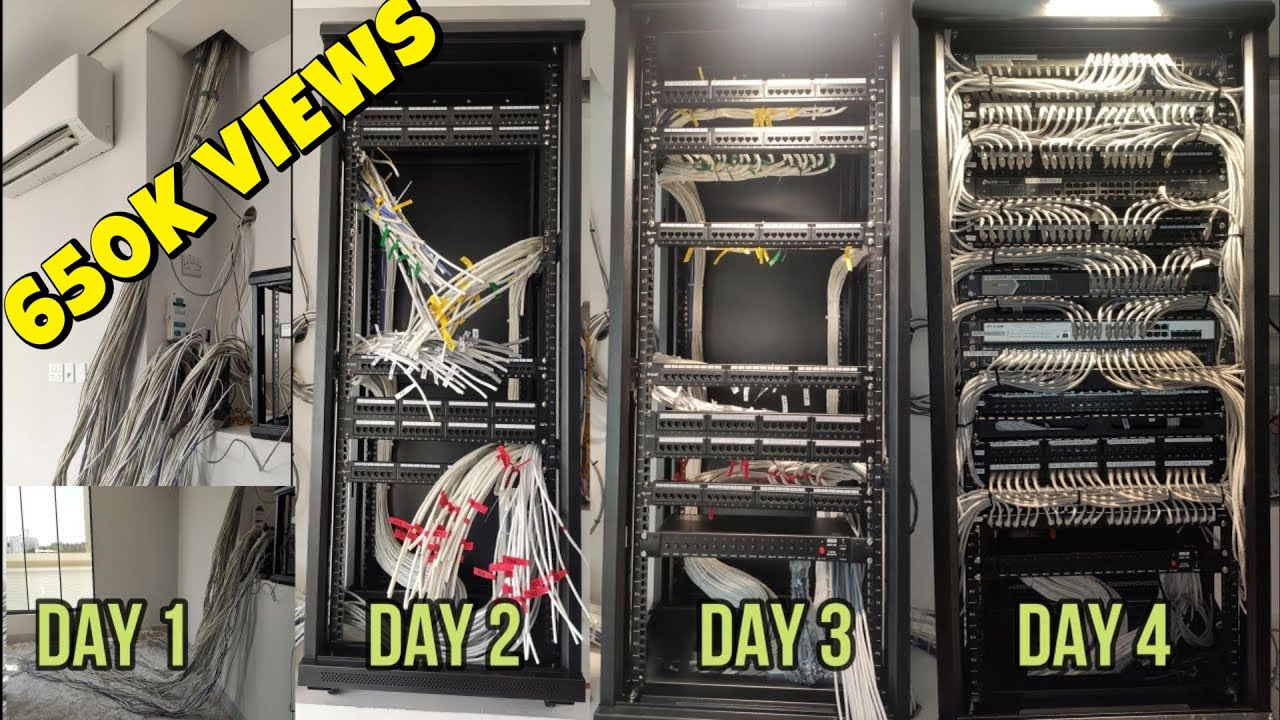
This is one reason experienced network cabling installation teams matter so much. A poorly handled CAT6A install can erase the very performance benefits the owner is paying for. Too much tension during pulls, sloppy dressing at the rack, untwisting pairs too far at termination points, or overpacked pathways can all lead to failed certification or marginal results.
The difference shows up most clearly in renovation projects. New construction gives you cleaner routes and better planning opportunities. Retrofits are messier. Above-ceiling congestion, old pathway limitations, shared risers, and occupied work areas all complicate office network cabling. CAT6A can still be the right answer, but it needs a contractor who understands that this is not simply “the same as CAT6, just more expensive.”
Shielded vs unshielded, and why the answer is not automatic
One of the more common questions around CAT6A cabling is whether it needs to be shielded. The short answer is no, not always. Unshielded CAT6A exists and is widely used. Shielded options can provide additional protection in electrically noisy environments, but shielding also adds complexity. It requires proper grounding and bonding practices, and if those are done poorly, the shield can become more of a headache than a benefit.
In a typical office with standard commercial power distribution and well-managed pathways, unshielded CAT6A is often enough. In manufacturing areas, medical settings with specialized equipment, or facilities with significant electromagnetic interference, shielded solutions may make more sense. The right choice depends on the environment, not on a blanket rule.
This is where site assessment matters. Good structured cabling design is rarely about picking the highest spec on a product sheet. It is about matching cable type, pathway capacity, termination hardware, and testing requirements to the building and the business using it.
CAT6A vs CAT6, the comparison that matters
For many buyers, the real decision is not whether to install cable at all, but whether to choose CAT6 cabling or CAT6A cabling. The difference is rarely just a matter of a few dollars per box of cable. It affects labor, fill ratios, rack density, and future flexibility.
Here is the practical comparison most businesses should weigh:
| Factor | CAT6 | CAT6A | |---|---|---| | Typical rated speed | 1 Gbps to 100 m, 10 Gbps for shorter distances | 10 Gbps to 100 m | | Cable size | Smaller, easier to route | Larger, takes more pathway space | | Installation difficulty | Moderate | Higher, requires more care | | Cost | Lower | Higher | | Future headroom | Good for many offices | Better for long-term growth and 10G plans |
That table captures the basics, but the real decision usually comes down to use case. A 3,000 square foot office with a central closet and no heavy data workflows may never need CAT6A. A corporate office with high-density Wi-Fi, conference spaces, security systems, and a five to ten year occupancy plan probably should not rule it out just to save a small percentage of project cost.
The business value is not just speed
Owners sometimes look at CAT6A and ask a fair question: if our users are fine at 1 gigabit today, why spend more? The answer is that cabling value has less to do with current desktop traffic than with lifecycle cost and operational flexibility.
A few examples make this clearer.
A fast-growing accounting firm might add more staff, more IP phones, more access points, and a backup appliance that moves data every night. A medical clinic might adopt higher-resolution imaging systems and cloud synchronization that create heavier traffic than the original office design assumed. A school may refresh wireless infrastructure every few years, and each generation of access points places greater demand on uplinks and PoE budgets. In each case, the business benefit of CAT6A is not a dramatic one-time speed jump for every user. It is avoiding the need to open ceilings and replace perfectly good but underspecified cable.
There is also a productivity angle that does not always show up in a budget spreadsheet. Networks with more headroom are easier to scale, easier to troubleshoot, and less prone to the gray-area performance complaints that waste IT time. When everything is technically “working” but core links are strained, users experience delays, file sync issues, and spotty performance that are hard to quantify and annoying to diagnose. Better infrastructure often pays for itself through fewer workarounds and fewer emergency upgrades.
Power over Ethernet changes the conversation
PoE has become one of the strongest arguments for thoughtful data cabling design. Today’s office network cabling often supports not just laptops and desktops, but wireless access points, IP phones, badge readers, cameras, sensors, and digital signage. That means the cabling plant is delivering both data and power across more links than it did a decade ago.
CAT6A is not required for PoE, but it can be beneficial in high-density environments because heat buildup in bundles becomes a bigger concern as power levels rise. Larger conductors and well-designed cable systems can help manage performance and temperature more effectively. In practice, that matters for crowded ceiling spaces with many powered devices, especially when cable bundles are large and airflow is limited.
If a business is planning a modern low voltage cabling system with dozens of access points and cameras, the conversation should include not just bandwidth but also power delivery, bundle management, and pathway capacity. Those are installation details, but they affect long-term reliability.
Where CAT6A makes the most sense
Not every project needs CAT6A, but some environments consistently benefit from it. The pattern is usually easy to spot once you know what to look for.
- Offices expecting a 7 to 15 year cabling lifespan
- Buildings with longer horizontal cable runs
- Sites planning 10 gigabit uplinks to users or access points
- High-density PoE deployments such as Wi-Fi, cameras, and smart building devices
- Businesses where downtime or retrofit disruption is especially costly
That list covers more situations than many people realize. It includes not just large enterprises, but also professional offices, healthcare facilities, education spaces, and mixed-use buildings that want infrastructure to outlast several generations of network hardware.
When CAT6A may be more than you need
There are also cases where CAT6A is not the best fit. A small tenant improvement project with short runs, a limited budget, and no foreseeable 10 gigabit edge requirement may be better served by high-quality CAT6. The key phrase there is high-quality. Good materials, proper terminations, accurate labeling, and certified testing often matter more than chasing a category rating for its own sake.
I have seen too many projects where the category choice got all the attention while the workmanship did not. A properly installed CAT6 system will outperform a careless CAT6A install every time. Network cabling is not just about the cable jacket print. It is a system, and systems succeed or fail in the details.
The installation details that separate a clean job from a troublesome one
On commercial sites, cabling problems usually do not come from dramatic failures. They come from small shortcuts repeated across dozens or hundreds of drops. Those shortcuts may not show up until users move in, access points are powered up, and the network starts carrying real traffic.
The trouble spots I watch most closely are these:
- Overfilled pathways that crush cable or make future adds difficult
- Excessive untwist at jacks and patch panels
- Poor separation from electrical systems where interference is possible
- Incomplete labeling that turns service calls into detective work
- No certification testing, or testing without useful documentation
Those are avoidable mistakes, but only if the contractor treats structured cabling like infrastructure rather than commodity labor. Testing is especially important. Every link should be certified to the appropriate standard, and the results should be handed over in a form the client can keep. That documentation is not paperwork for its own sake. It becomes a baseline for troubleshooting and proof of performance.
Cost, and why labor often matters more than cable price
People often focus on cable cost per foot, but in many commercial projects, labor is the larger variable. Pulling cable through an occupied office after hours, working around finished spaces, coordinating with electricians and other trades, firestopping penetrations, dressing racks, and certifying links all add up quickly. The difference in material price between CAT6 and CAT6A matters, but it is only part of the picture.
That is why value engineering needs to be done carefully. Choosing a lower cable category might reduce the initial invoice, but the savings can look small when compared with the cost of replacing that cable later. If a business expects to remain in the space for many years, or if construction access is easy now and will be difficult later, paying more upfront often makes financial sense.
I often frame it this way for clients: electronics are swapped on a cycle, cabling is not. Switches may change every five to seven years. Access points may change sooner. The cable in the walls should be chosen with a longer horizon in mind.
How CAT6A fits with modern wireless networks
It may seem odd to invest in better cable when so many users are on Wi-Fi, but wireless performance depends heavily on the wired backbone behind it. Each access point is still a wired device at heart. As wireless standards improve, access points push more traffic and often require multi-gigabit links to avoid bottlenecks.
That has changed the economics of business network installation. Ten years ago, a company could treat Wi-Fi as a convenience layer. Today, in many offices, it is the primary access method for laptops, phones, and collaboration devices. That means each ceiling-mounted AP deserves serious thought in the cabling design. A building with dozens of APs can place substantial demands on the switching and cabling infrastructure, especially if those APs are fed by 2.5 or 5 gigabit Ethernet and high-power PoE.
CAT6A does not guarantee great wireless, but it removes one common bottleneck from the design.
Planning for the next tenant, the next refresh, and the next use case
One of the less discussed benefits of better office network cabling is flexibility. Spaces change. Teams move. Conference rooms become collaboration studios. Empty offices become call centers or labs. A lease renewal can suddenly make a “temporary” office into a long-term home.
If the cabling plant has room to grow, those changes are easier. If every pathway is packed, every run is near its limit, and every upgrade requires compromises, the business ends up paying in disruption rather than just dollars.
CAT6A gives planners breathing room. Not infinite room, and not a substitute for good design, but enough margin to support changing demands without immediate recabling. In my experience, that is often the strongest argument for it. The cable may never get credit when things go smoothly, but it gets blamed quickly when the network cannot evolve with the business.
The practical question to ask before choosing
The best category choice usually comes down to one practical question: what problem are you trying to avoid over the life of this installation?
If the answer is unnecessary upfront cost in a small, simple office, CAT6 may be the sensible choice. If the answer is premature obsolescence, limited 10 gigabit support, expensive future retrofits, or uncertainty around long runs and dense PoE devices, CAT6A deserves serious consideration.
That decision should be made alongside pathway design, rack layout, switch plans, and testing requirements, not in isolation. Good network cabling, whether it is data cabling for a single office floor or a broader low voltage cabling scope across a commercial site, works best when the system is designed as a whole.
CAT6A is not hype, and it is not mandatory for every project. It is a tool. Used in the right setting, it gives businesses stronger speed support, full-distance 10 gigabit capability, and infrastructure that can absorb future changes without another round of demolition and disruption. For many organizations, that is not a luxury. It is simply good planning.
Fontana Tech Pros provides professional network cabling installation, structured cabling, fiber optic installation, commercial WiFi, access control, security camera installation, alarm systems, and phone system solutions for businesses throughout Southern California. Learn more at https://fontanatechpros.com/.
Fontana Tech Pros specializes in reliable network cabling solutions for commercial offices, warehouses, schools, and industrial facilities. Our experienced team delivers high-quality structured cabling and low-voltage installations designed for long-term performance.